

Restoration and environmental education as part of the annual cycle
The Nascente Viva annual plan follows a clear principle: renaturation and ongoing environmental education go hand in hand. Every year, a new area is selected for the initiatives – as shown on the project map – with the aim of planting at least 2,500 trees. Each tree represents a contribution to climate protection, species conservation and the restoration of biodiversity.
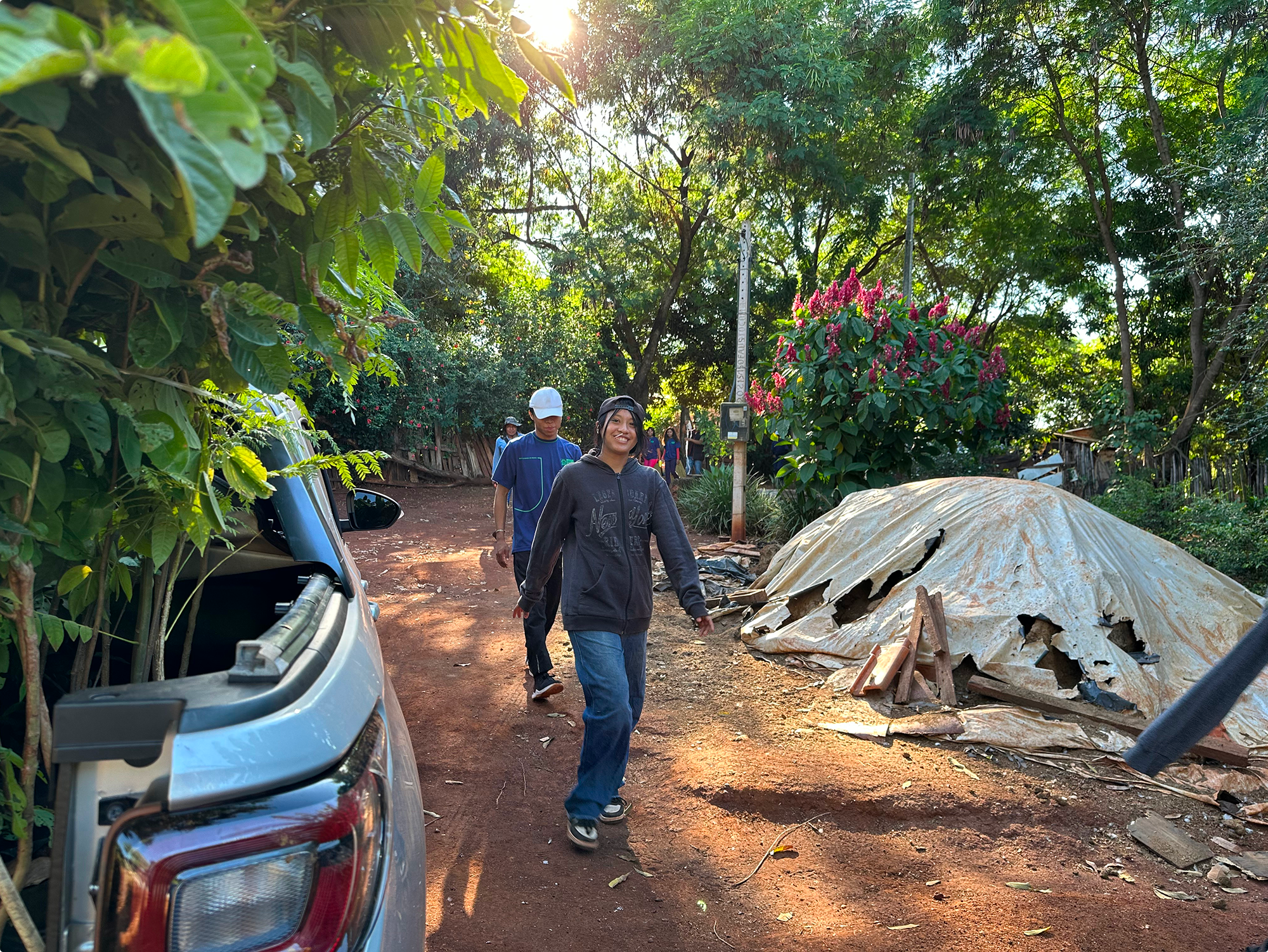
The planting takes place with the active participation of pupils from partner schools – the Guateka State Intercultural Indigenous School and the Tengatuí Marangatu Municipal Indigenous School. Other schools in the municipality are also invited to take part. When children plant a tree, they learn more than just ecology: they practise citizenship, a sense of responsibility and self-confidence, and strengthen their connection with their own territory.
When Dourados plants, Frankfurt runs
The tree-planting initiatives form part of solidarity events organised in partnership with the German association Tarahumara Fans e.V., based in Frankfurt. The principle is as simple as it is effective: when Dourados plants, Frankfurt runs. Two continents, united by a common cause – the belief that resource conservation and international solidarity go hand in hand.
Four dates feature on the annual calendar:
March Project anniversary
June Environment Week
September Brazilian Tree Day
November Last planting of the year
Where education grows roots
Environmental education is not a supplementary programme, but rather the central and ongoing focus of the project. It takes place both on planting days and during the educational activities that follow: children and young people learn how to manage natural resources, experience the fundamentals of sustainable land use and understand what climate adaptation means in their daily lives.
Furthermore, in partner schools, project scholarship holders work directly in the nursery, the seed bank and on cistern maintenance. This hands-on learning fosters initiative promotes gender equality – as they share responsibilities – and shows young people that sustainability is not a school subject, but an attitude.