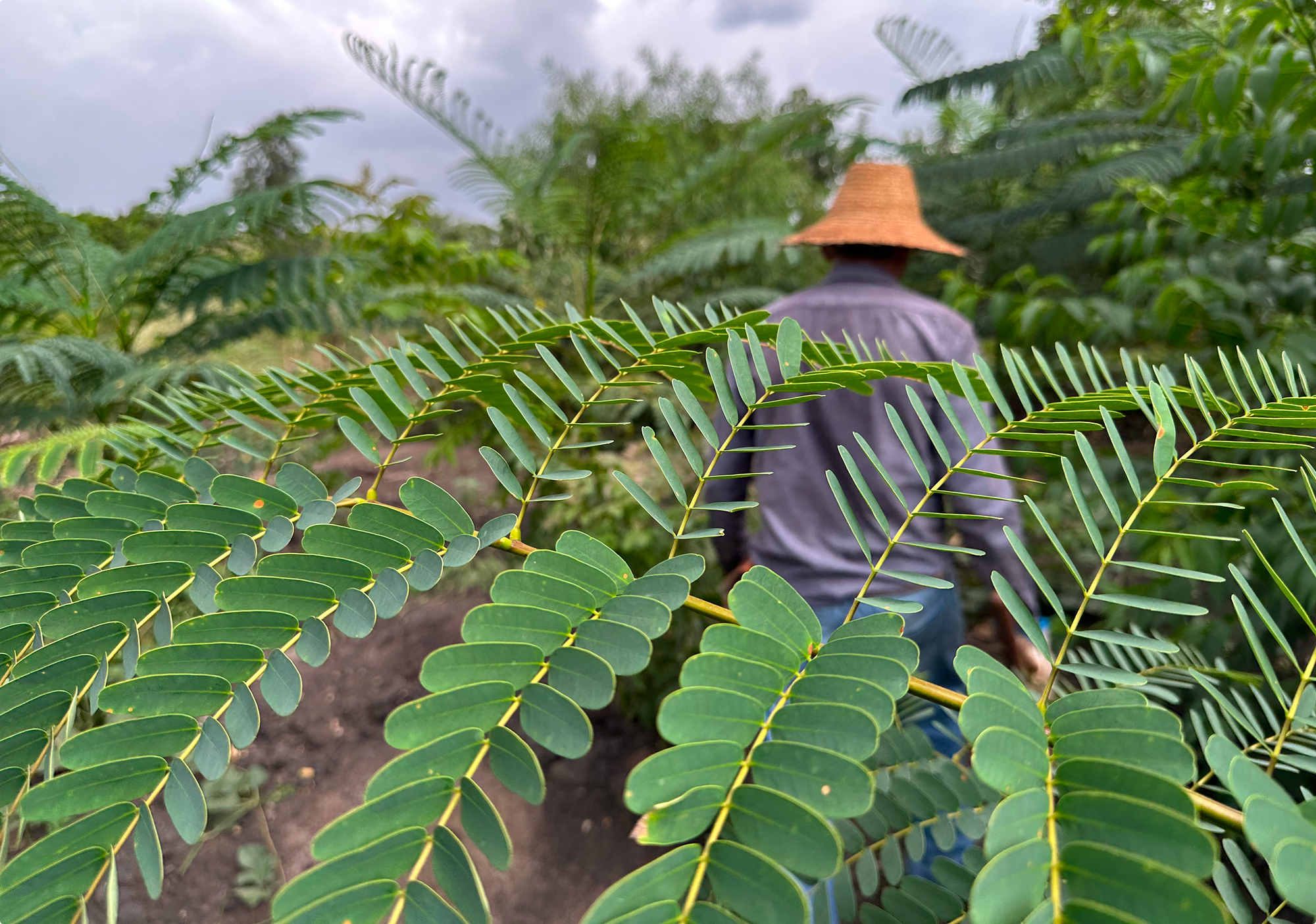
Objective and approach
Nascente Viva is a socio-environmental regeneration project in the indigenous village of Jaguapirú-Bororó, in Mato Grosso do Sul. Launched in 2017, its main objective is to ensure the sustainable and continuous supply of water for the entire community – through the restoration of springs and riparian forests.
The approach is as comprehensive as the problems it faces. The focus is on adapting to climate change, protecting and restoring biodiversity, preserving the resources of threatened ecosystems, protecting species along river courses, and consistently promoting gender equality in all project activities. In its first phase, the project focuses on the source of the Jaguapirú stream – where regeneration begins.
Two principles ground the work
Environmental education and the active participation of the community and its schools are not merely complementary measures, but prerequisites for the project’s ongoing success. The project is apolitical and religious-neutral – with no political or religious involvement.
So far, Nascente Viva has received four honourable mentions. Further information can be found in the Press and Awards section.
Environmental education and community participation
Environmental education is a central topic of Nascente Viva. The indigenous village schools form the basis of all activities and act as key partners. Pupils, teachers and the project team play an active role – from building cisterns and setting up nurseries to planting initiatives and ecological monitoring.
Currently, the project collaborates with two educational institutions: Guateka State Intercultural Indigenous School, where a cistern and a nursery have been installed, as well as Tengatuí Marangatu Municipal Indigenous School, where the seed bank is located. The project is recognised and supported by the community, as well as by traditional and elected leaders.
What has been achieved so far
Nascente Viva is a well-established project. Over the years:
- we have planted over 10,000 trees – a tangible contribution to climate protection and biodiversity,
- we have built a nursery, a seed house and a cistern,
- we have restored the bed of the Jaguapirú stream,
- we have carried out infrastructure works at the source of the Jaguapirú.
These achievements show that ecological land use and resource protection are possible even under the most adverse conditions – when a community takes ownership of this work.

How it all began
The project was launched in 2017 in response to the progressive silting up of the Jaguapirú stream, which had caused a severe water shortage in the region. From the outset, the project was developed in collaboration with indigenous leaders, universities, civil society organisations and international partners.
The key figures in the creation and structuring of the project
Lenir Paiva Flores Garcia
Project initiator and president of the Association of Indigenous Women (AMID). She is responsible for liaising with the local community and is an example of the importance of women’s empowerment as a driving force for change.
Zefa Lobschenko
Federal University of Grande Dourados (UFGD) – responsible for renaturation and cooperation with environmental agencies such as IBAMA and FUNAI.
Elen Mary Machado
Tarahumara Fans Association e.V. (Frankfurt, Germany) – responsible for the general administration of the project and fundraising.
Olácio Komori
Association of Organic Farmers of Mato Grosso do Sul (APOMS) – technical advisor to the project and specialist in ecological land use.
Aquiles Paulus
Justitia Institute – lawyer and responsible for local financial management.
From the outset, the project has been managed and funded primarily by the Tarahumara Fans Association e.V., a non-profit organisation based in Frankfurt, Germany. Further information: www.runningfortheplanet.com
From Dourados to Frankfurt – there and back
The internationalization of Nascente Viva began in Germany. In Frankfurt, the partner association Tarahumara Fans e.V. organized the project’s international launch race, which was attended by more than 300 athletes. Among the guests were Aquiles Paulus (Justitia Institute), as well as the Vice-Rector for Extension of the Federal University of Grande Dourados, Dr. Juliana Carrijo, and the coordinator Dr. Mara Massuy.
One detail revealed the spirit of the project: the race medals were indigenous necklaces, made by the Guaté group of artisans from the Jaguapirú-Bororó Village – a recognition of the culture and work of these people, for whom and with whom the project was created from the beginning. Since then, regular solidarity actions have united Dourados and Frankfurt: barefoot races in Germany, planting actions in the project area in Brazil – two continents, one goal. More information can be found on the project timeline.
